
“Following a devastating fire, Dayspring’s ability to pull resources from all over the state within hours was incredible. They had over 50 workers onsite within 2-3 hours! We would never have been able to have our students back in school within 2 days were it not for the quick response and the quality of work provided by them. Their quality of work was excellent!”
Job completed for Sara D
Completion date: April 2, 2026
Location: Missoula, MT
Why did the customer contact us?
The homeowner, Sara, initially contacted us regarding extensive moisture damage visibly tracking through her mudroom and adjacent garage wall. Believing the damage was connected to potential ventilation issues in the attic space, she monitored the area for two weeks as conditions deteriorated. Upon removing a section of the drywall herself, Sara discovered an active, hidden leak from a pressurised water line. While a plumber was immediately dispatched to resolve the pipe failure, the two-week delay allowed structural water damage to advance significantly. Sara required a specialist team to complete a comprehensive structural inspection, establish biohazard containment for advanced microbial growth, navigate a potential insurance claim under her $5,000 deductible, and perform a separate structural assessment of her upper attic ventilation system.
Solutions provided:
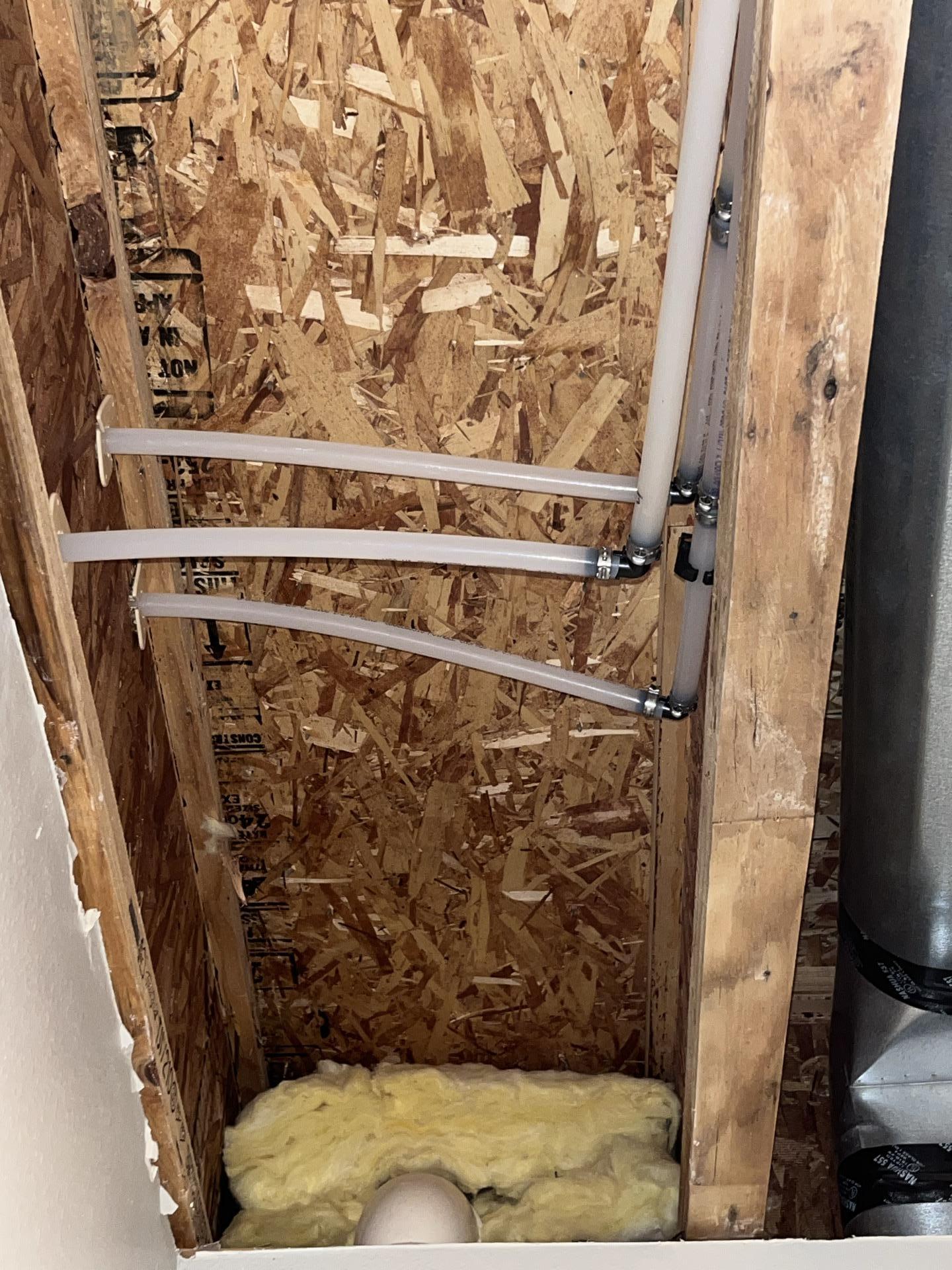
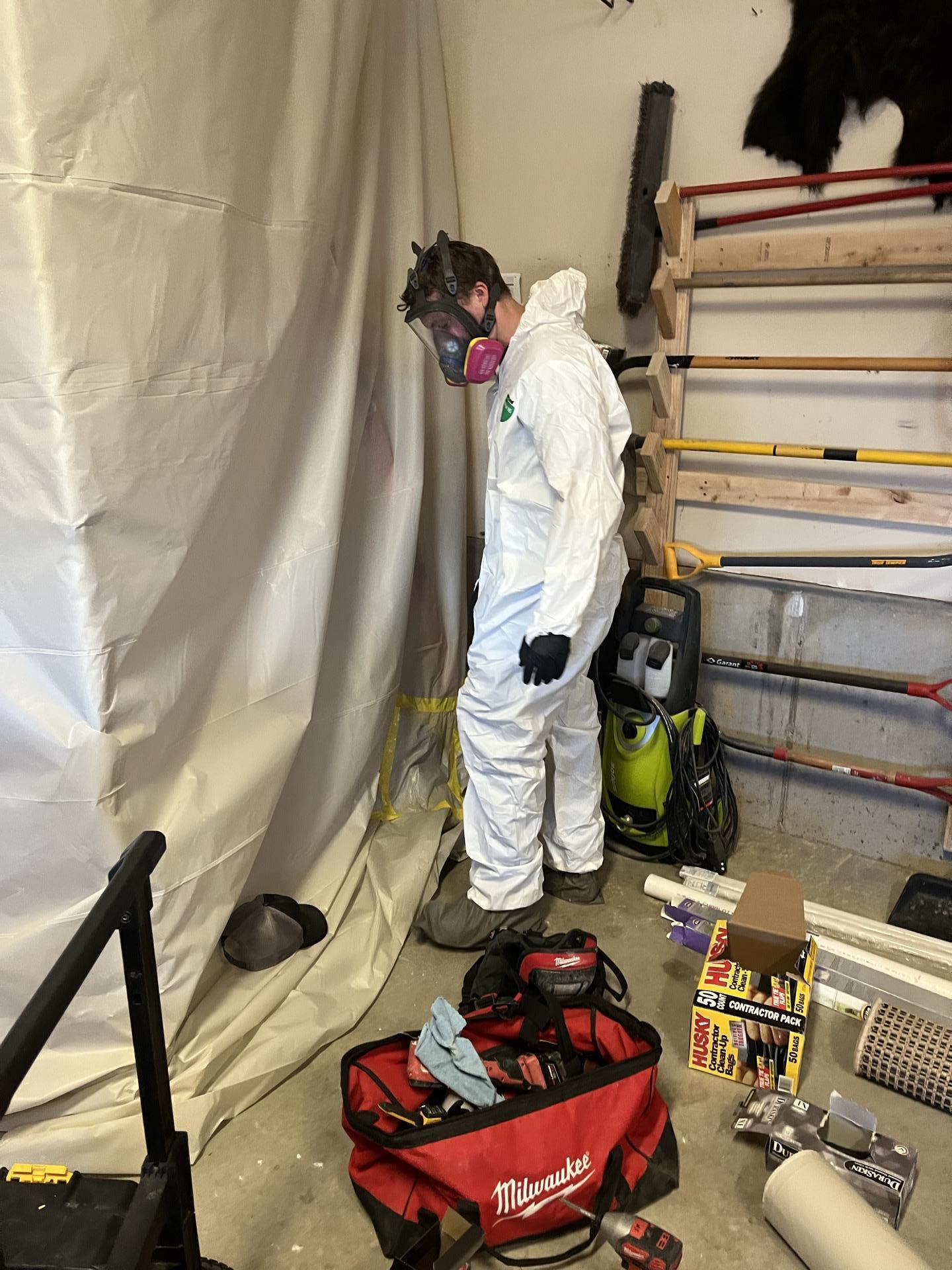
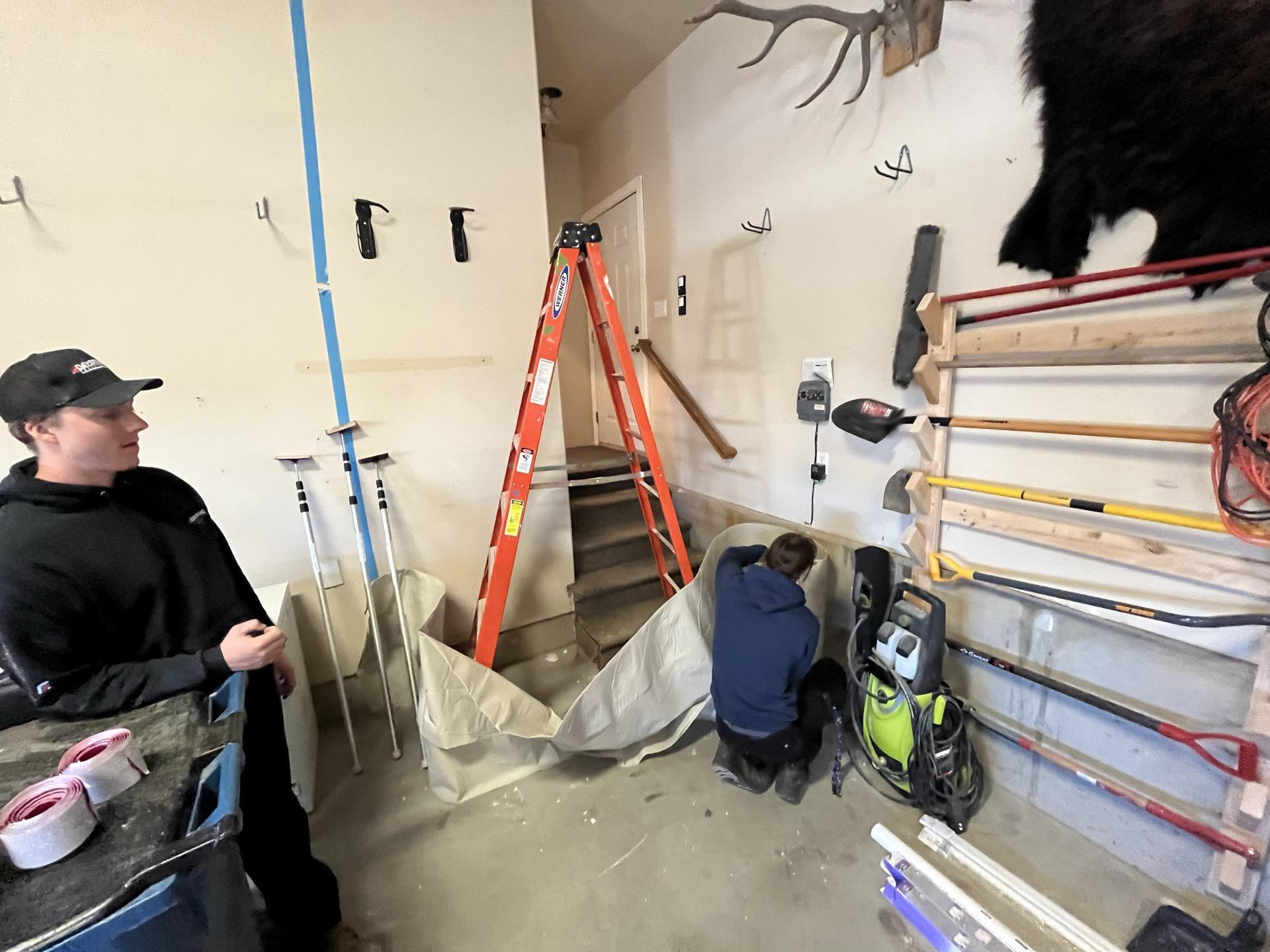
Our team implemented an elevated categorical water loss and biohazard containment protocol- Critical Biohazard Containment: Built an engineering containment zone using heavy-duty plastic sheeting and tension poles to isolate the mudroom and garage transition zones from the main living areas. Controlled Demolition & Insulation Stripping: Removed heavily saturated fibreglass insulation and cut back water-logged, structural drywall panels that exhibited severe, active black mould growth. Precision Plumbing Inspection: Documented the newly repaired PEX pressurised water line runs and associated crimp rings within the exposed timber framing cavity to verify system integrity before drying. Advanced PPE Compliance: Technicians executed all remediation work inside the containment zone utilizing full-body Tyvek suits, safety gloves, and full-face respirators equipped with particulate cartridges to ensure safety against airborne spores. Tiled Subfloor Evaluation: Evaluated structural water migration beneath the mudroom tile flooring, documenting standing moisture seeping through the grout lines to establish an aggressive sub-surface drying program.
Photos & Videos:
Why You Can Rely on Dayspring Restoration

Serving Your Local Area Since 1989

24/7 Emergency Response

Insurance Claims Assistance

Licensed, Bonded, and Insured

Advanced Certification Training

Full-Service Restoration From Demo to Rebuild

3D Site Imaging with Docusketch
Our Customer Reviews
Kalli Kind
Helena Public Schools
“Over the past eighteen years I have worked with Dayspring on a daily basis. I have worked with them professionally and have had them work for me personally. In both instances I have found them to be professional, courteous, and helpful.”
Bob King
State Farm Insurance, Missoula, MT
Awards and Affiliations




- Absarokee
- Acton
- Anaconda
- Ballantine
- Batavia
- Bearcreek
- Belfry
- Big Horn
- Big Sky
- Big Timber
- Billings
- Boyd
- Bozeman
- Bridger
- Broadview
- Busby
- Butte
- Cody
- Columbus
- Corvallis
- Crow Agency
- Custer
- Decker
- Deer Lodge
- Dillon
- Edgar
- Evergreen
- Fishtail
- Fort Smith
- Fromberg
- Garryowen
- Great Falls
- Hamilton
- Hardin
- Harlowton
- Hayden
- Helena
- Huntley
- Joliet
- Kalispell
- Klein
- Laurel
- Lavina
- Lewiston
- Livingston
- Lockwood
- Lodge Grass
- Melstone
- Missoula
- Molt
- Moscow
- Musselshell
- Nye
- Orchard Homes
- Park City
- Polson
- Pompeys Pillar
- Post Falls
- Powell
- Pryor
- Pullman
- Rapelje
- Red Lodge
- Reed Point
- Roberts
- Roscoe
- Roundup
- Saint Xavier
- Salmon
- Shawmut
- Shepherd
- Stevensville
- Test Hamilton
- Victor
- West Yellowstone
- White Sulphur Springs
- Whitefish
- Worden
- Wyola
